How a painting is made.
One painting, Haleakalā National Park, from the volcano to the wall.
I’m Topher Straus, a Colorado landscape painter, and this is how one painting is made, start to finish. Most begin as my own photographs, are painted by stylus on a tablet, and are then set into recycled aluminum with heat and pressure. Every painting follows the same six steps, and the work hangs in galleries and public places across the US.
Haleakalā National Park.
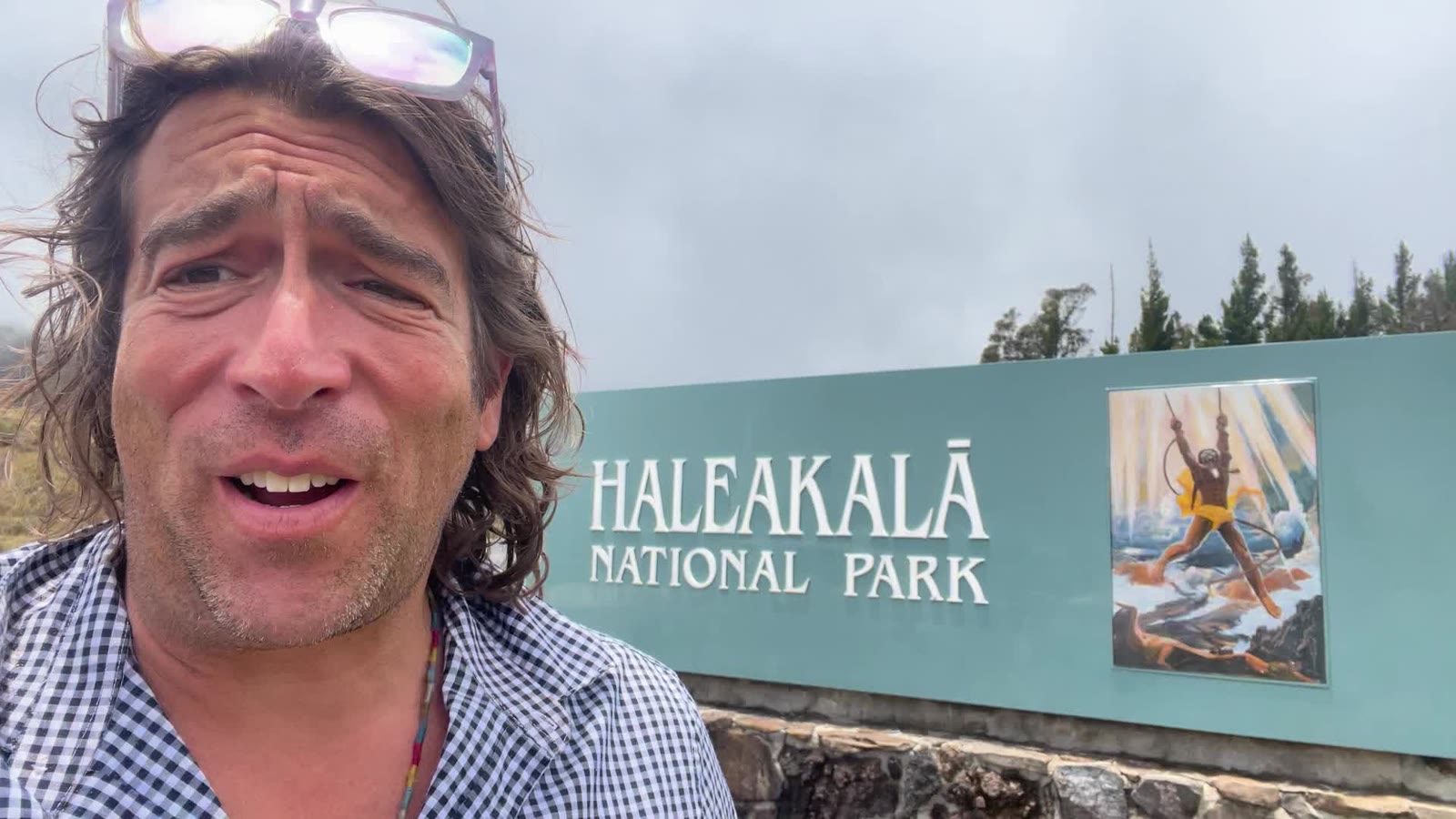
I biked to the top of this mountain in 2018. In May 2021 I went back to paint it, and I went back again in October 2026. This is how that painting got from the rim to the wall.

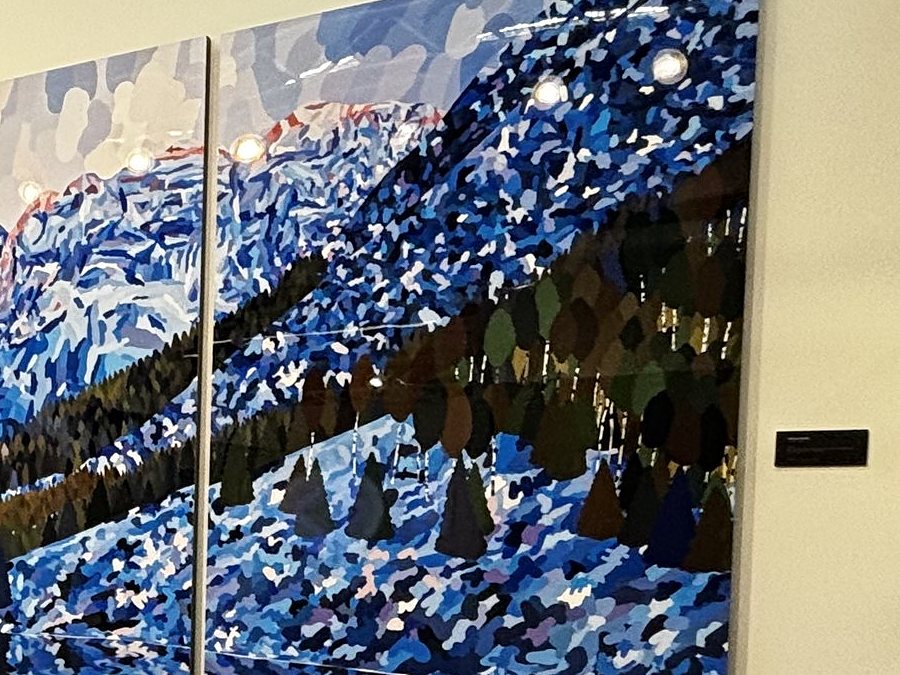
A painting, set into aluminum.
Most of my paintings start with my own photographs of a place I have been. I paint the picture by hand on a computer, with a stylus. Heat and pressure then transform the image into part of a recycled aluminum panel. Each size is a numbered edition, signed by me on the front. The digital file stays with me and is never sold or licensed to anyone else.

What I do, and what the tools do.
Mine
- Where to go.
- Which photographs make it.
- Every line and dot, by hand.
- How far to push the color.
- When it is right.
The tools
- Keeping the layers.
- Showing it at full scale.
- Carrying the dye.
- Applying the heat and pressure.
From the place to your wall, in six steps.
Six steps transform a place into a painting. I will tell you most of it.
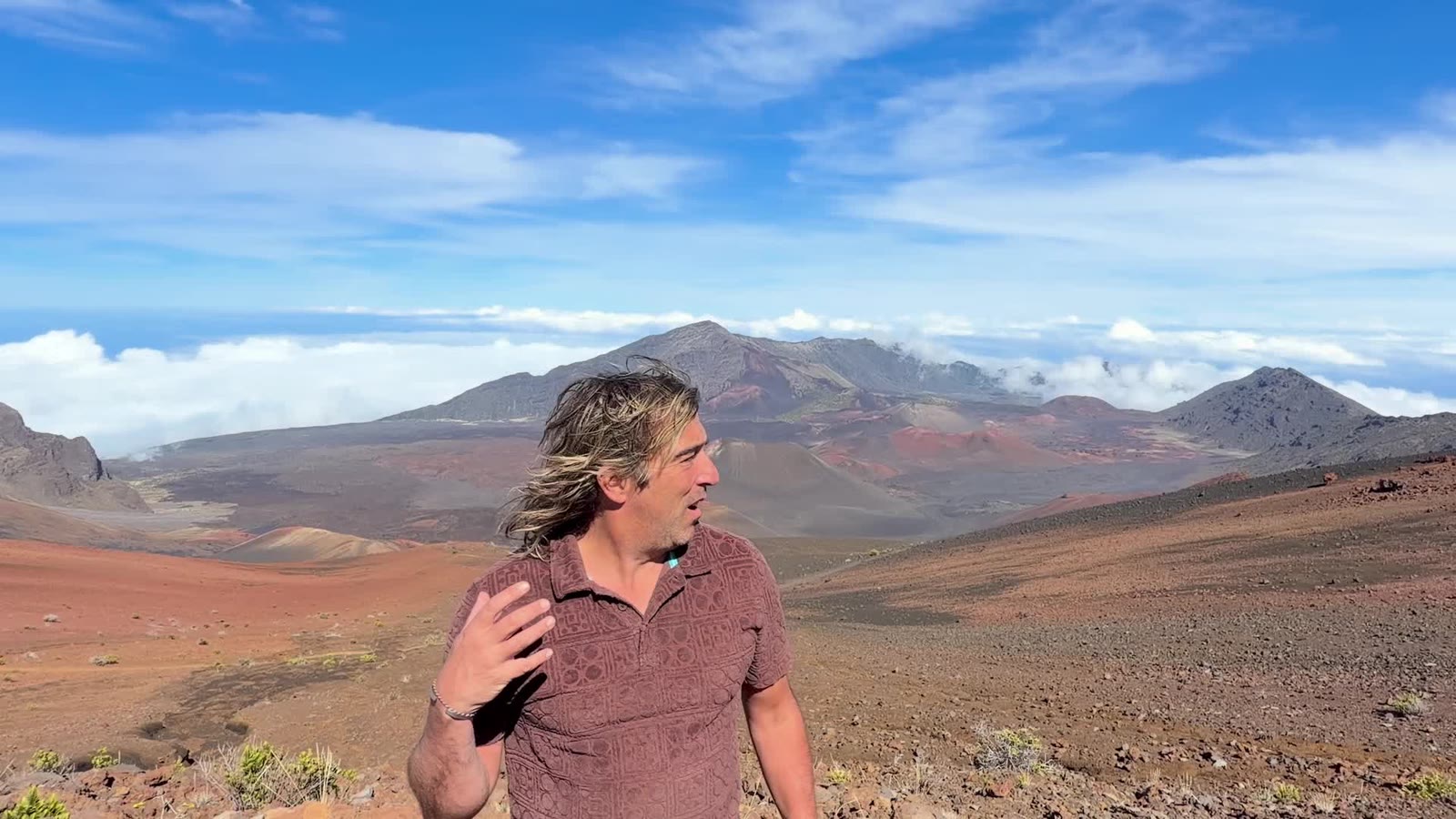
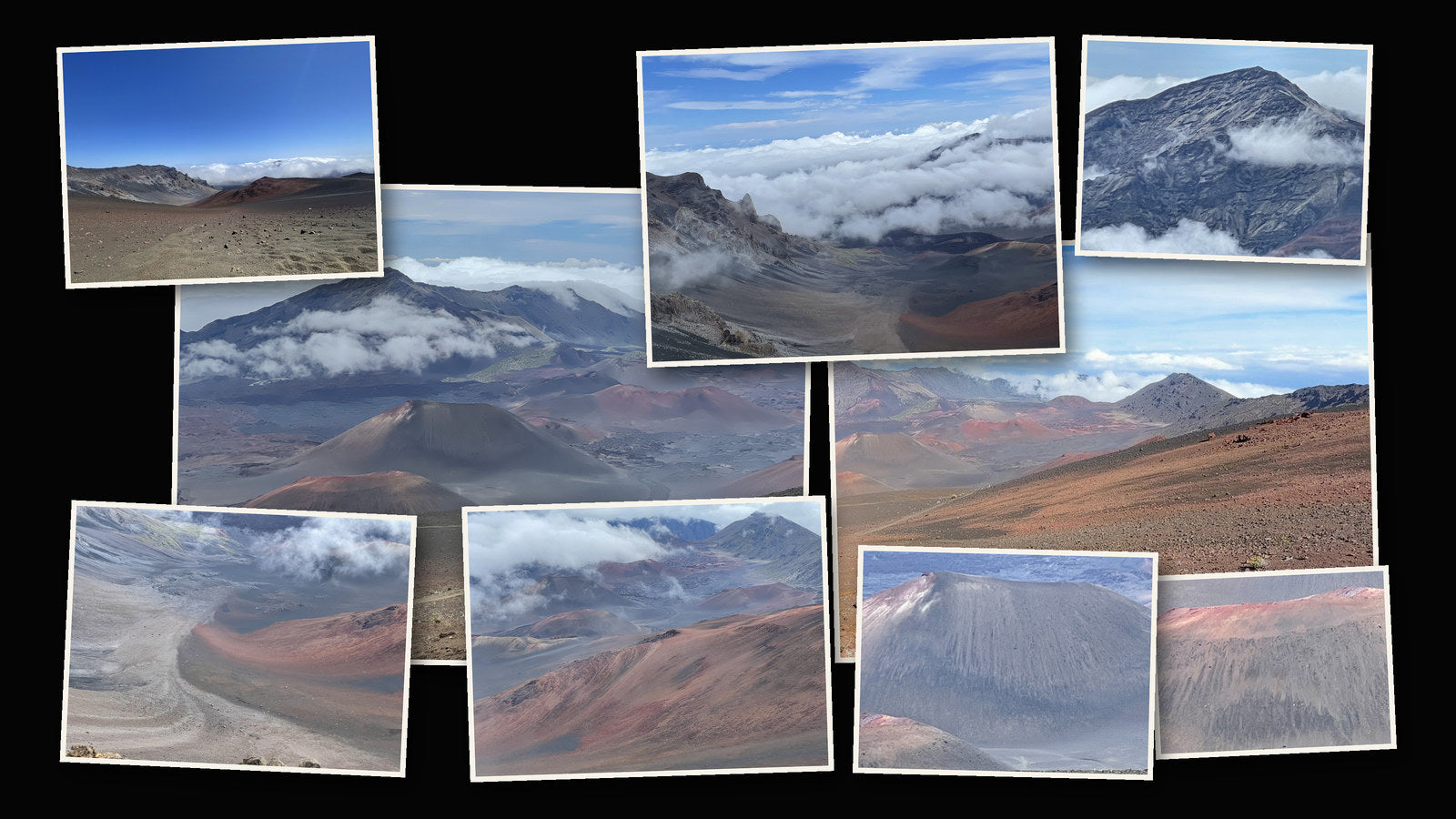
The pile: my photographs from the mountain, 2018 to 2022
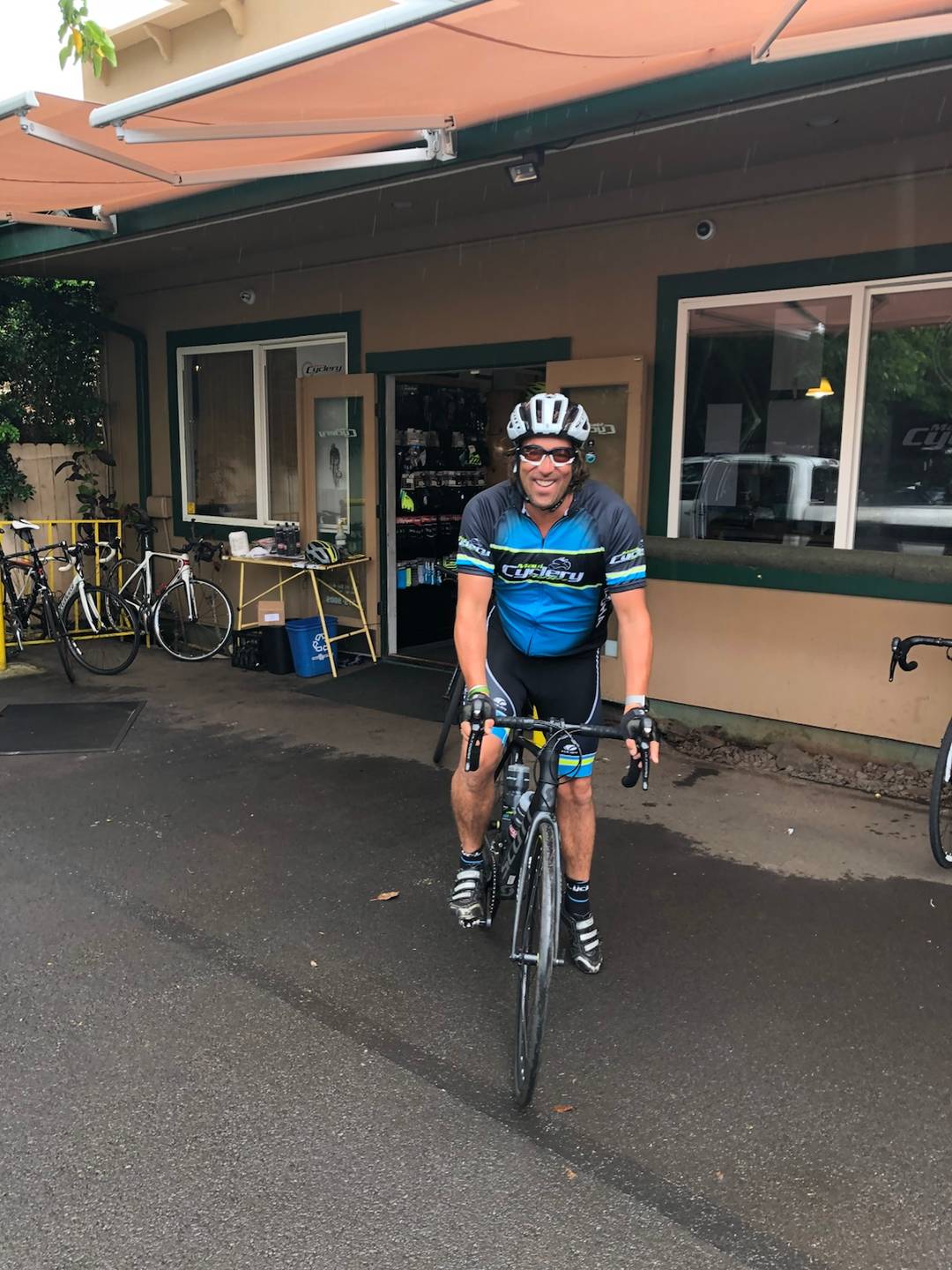
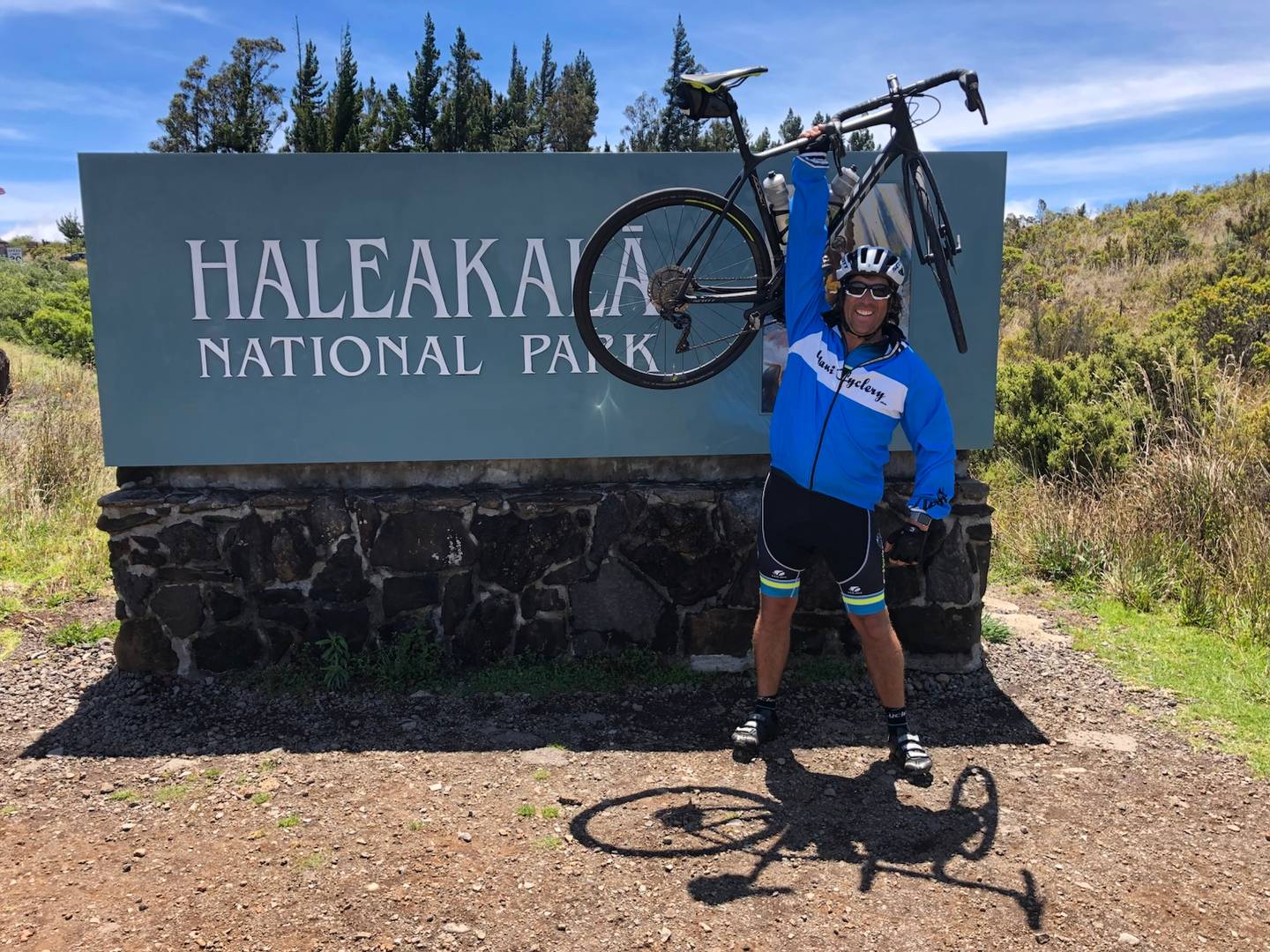
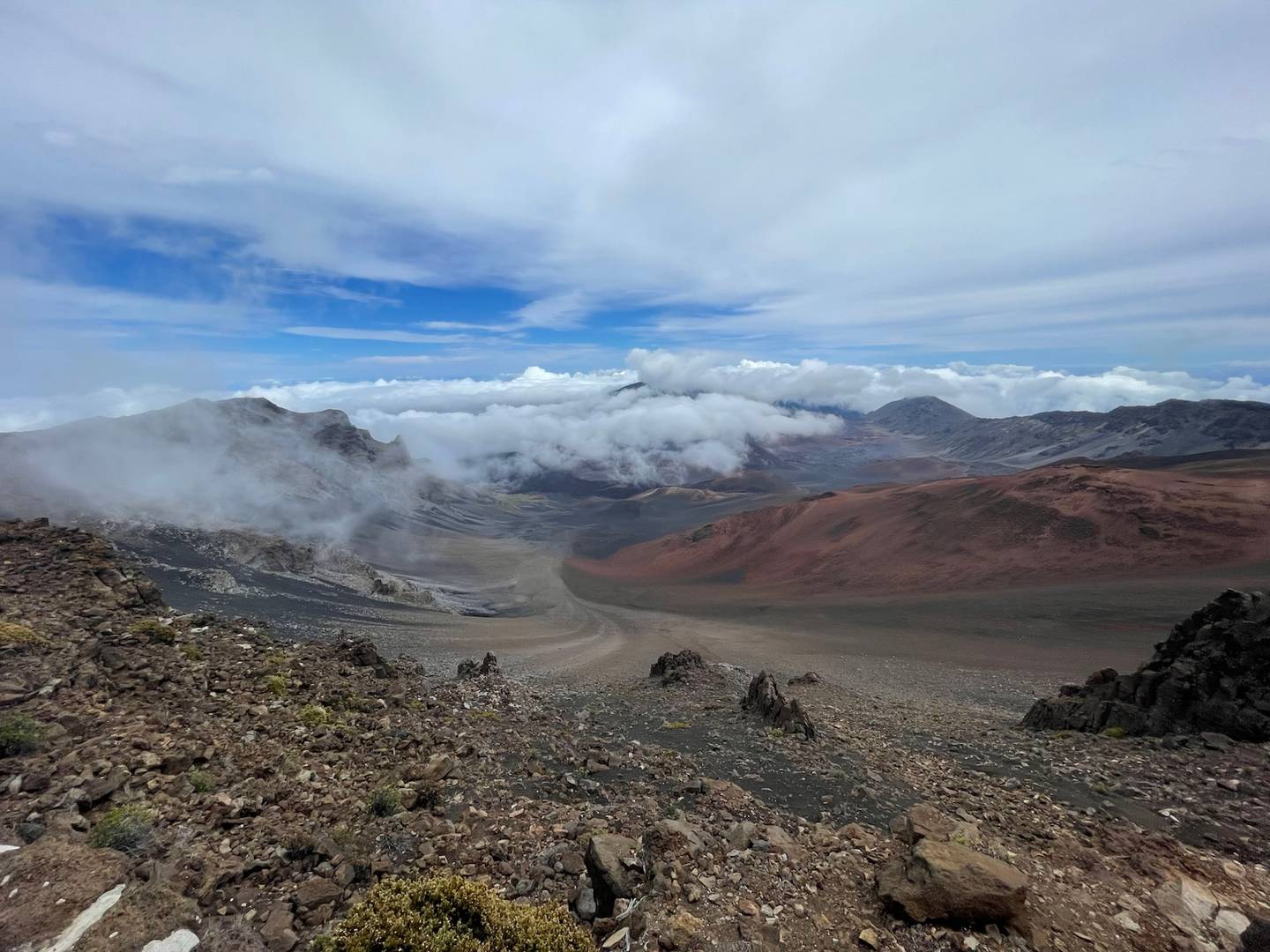
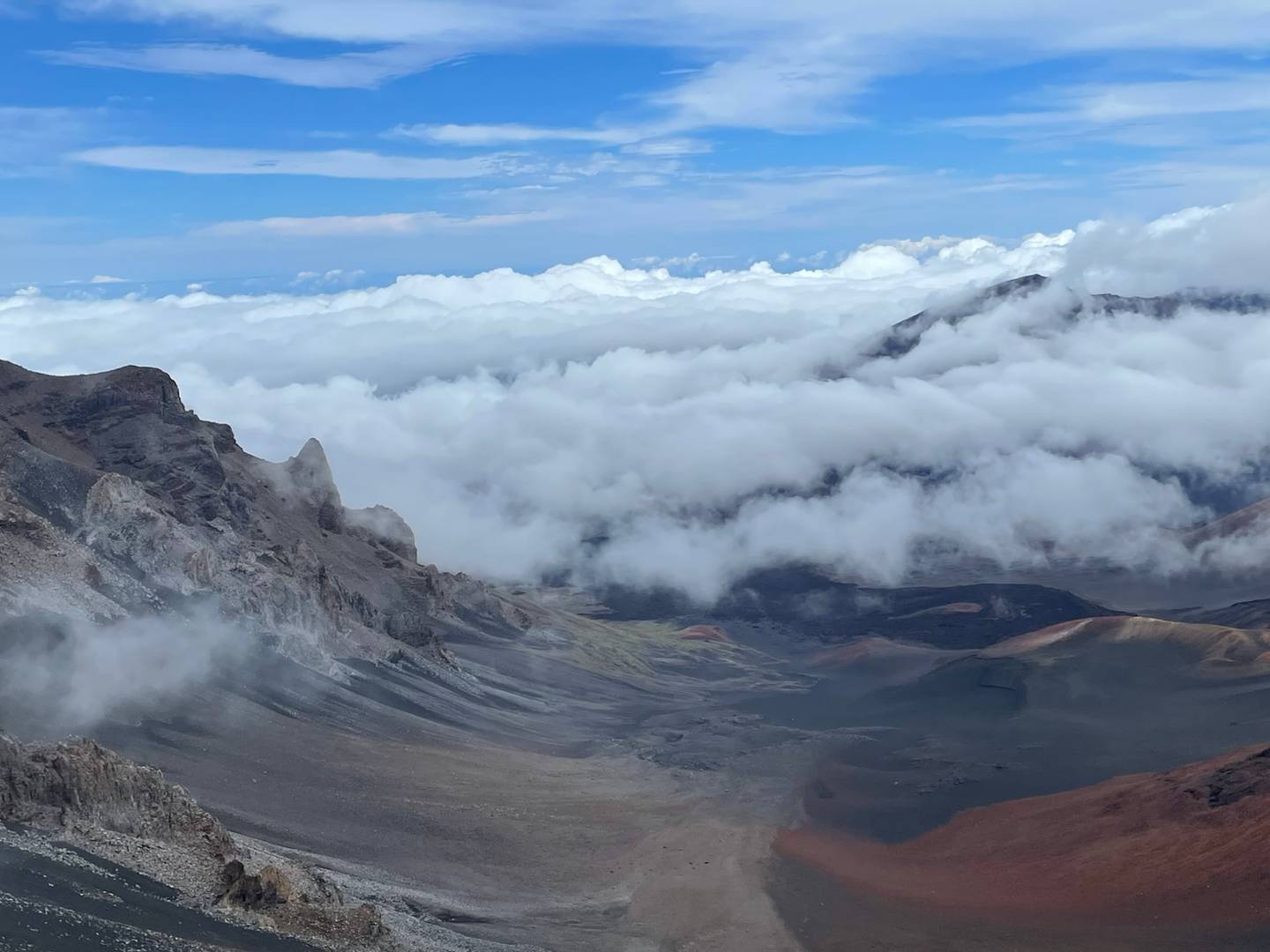
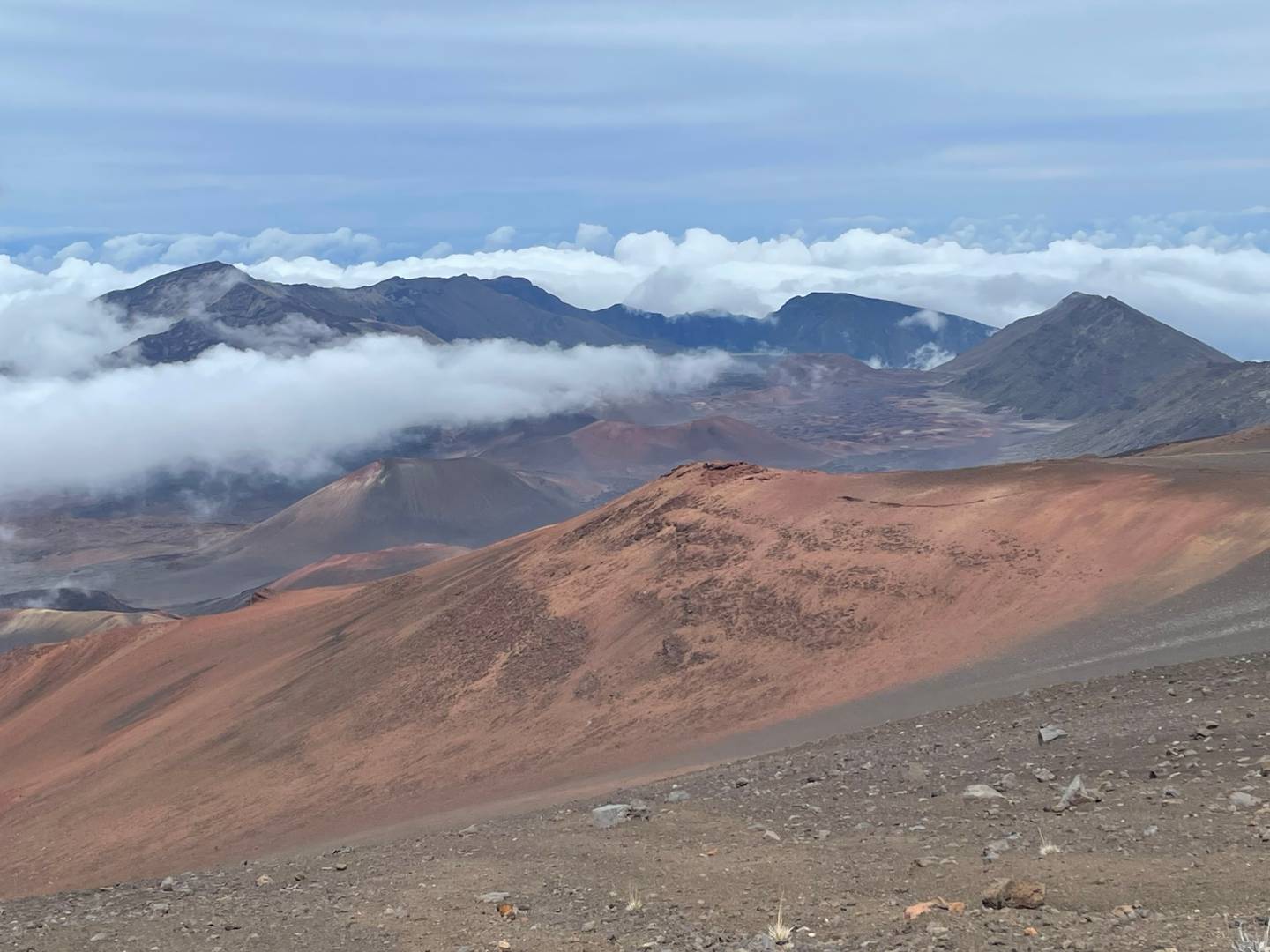
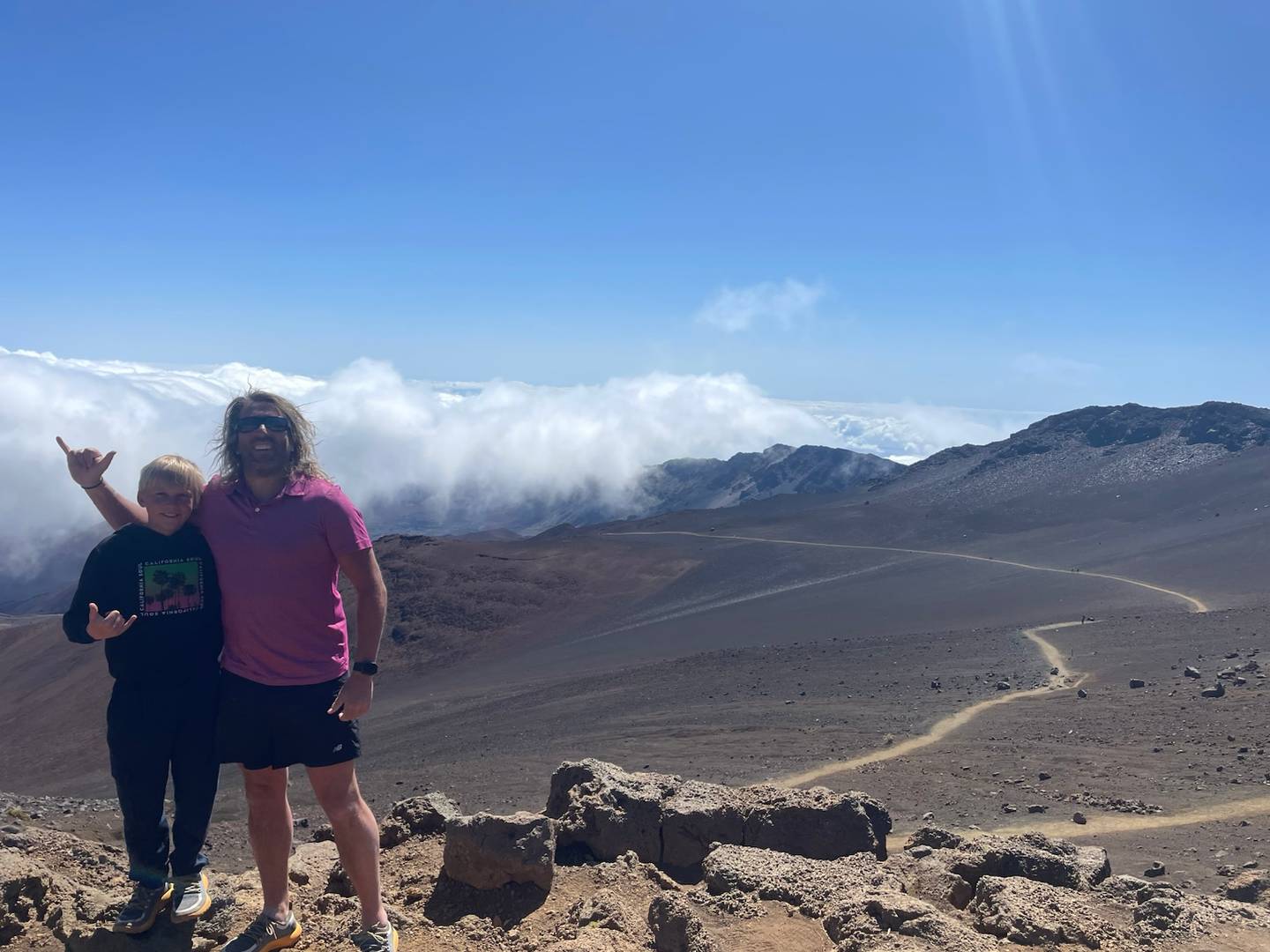
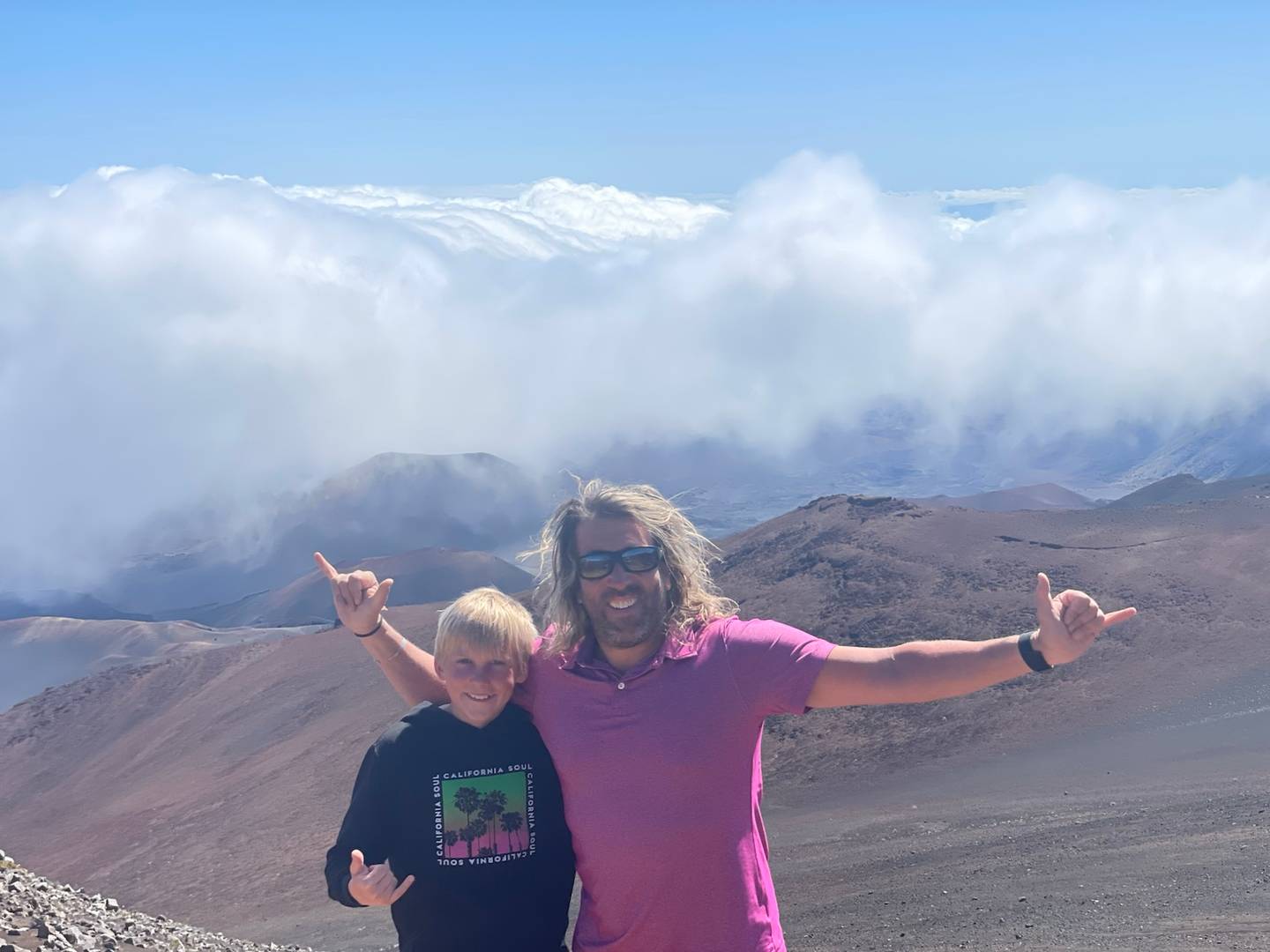
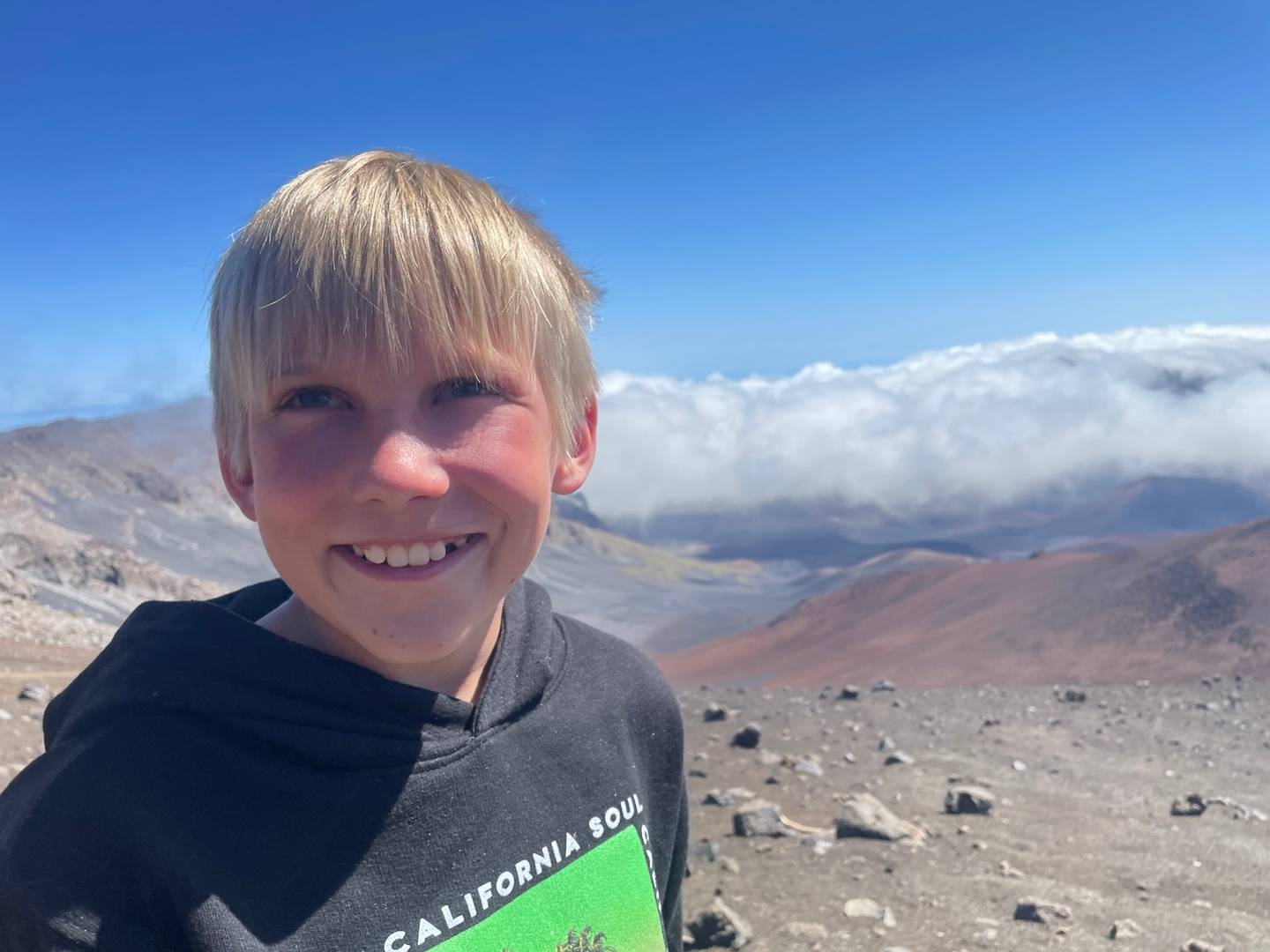
I go there. On foot, camera ready.
I choose places people love, places where memories are made. Most of my paintings start with my own photographs of a place I have been. I walk it, I look at it for a long while, and I come home with a pile of pictures. For Haleakalā, the place was the rim of the crater.
Made with Most often, my own photographs of the place.
I collage it. Then I try on colors.
Back at the computer, the best photographs get stacked into one composition, and I test palettes until the colors feel right. The rest go back in the pile.
Made with Adobe software and a computer.
I paint it. I don’t trace it.
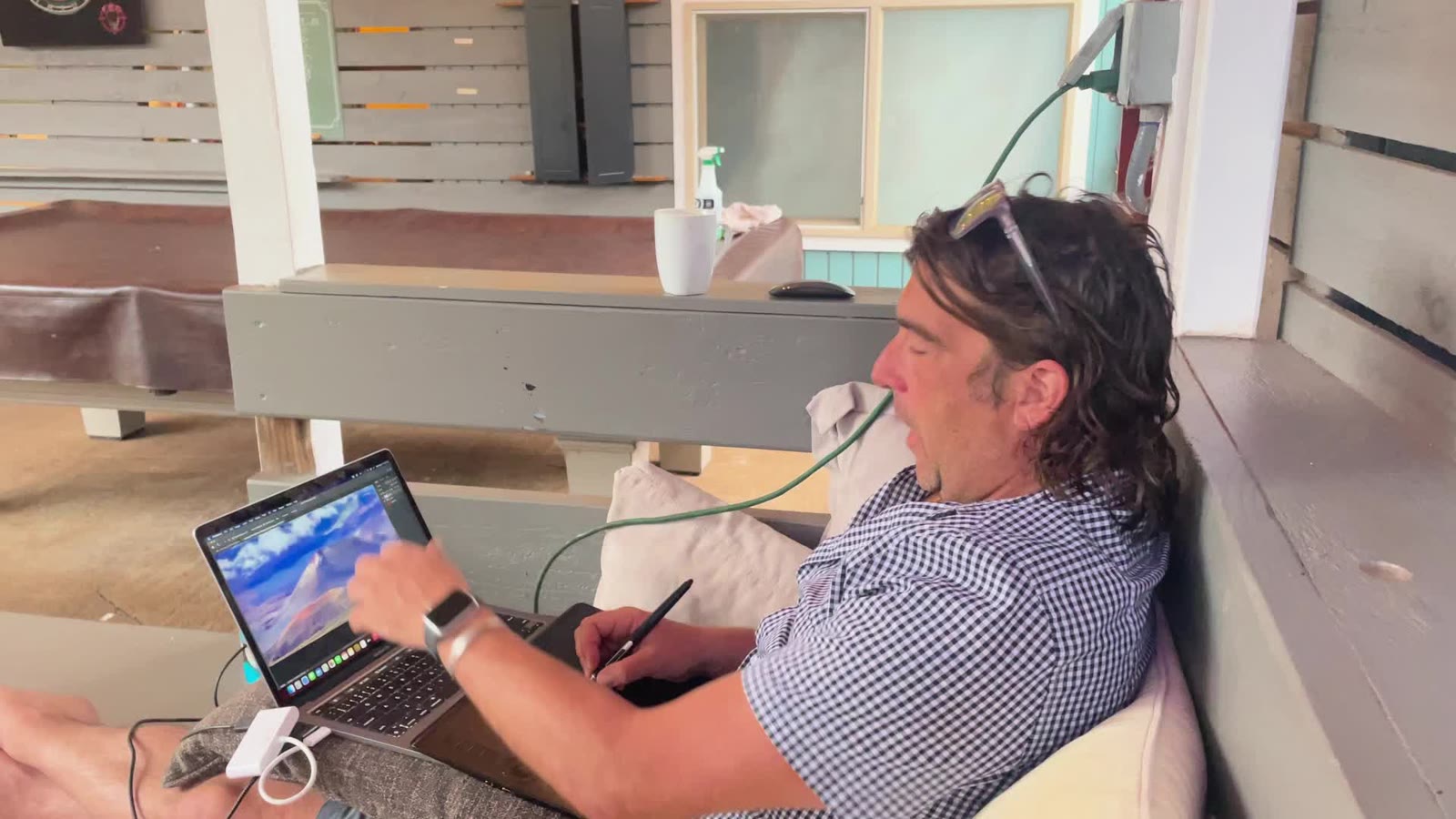
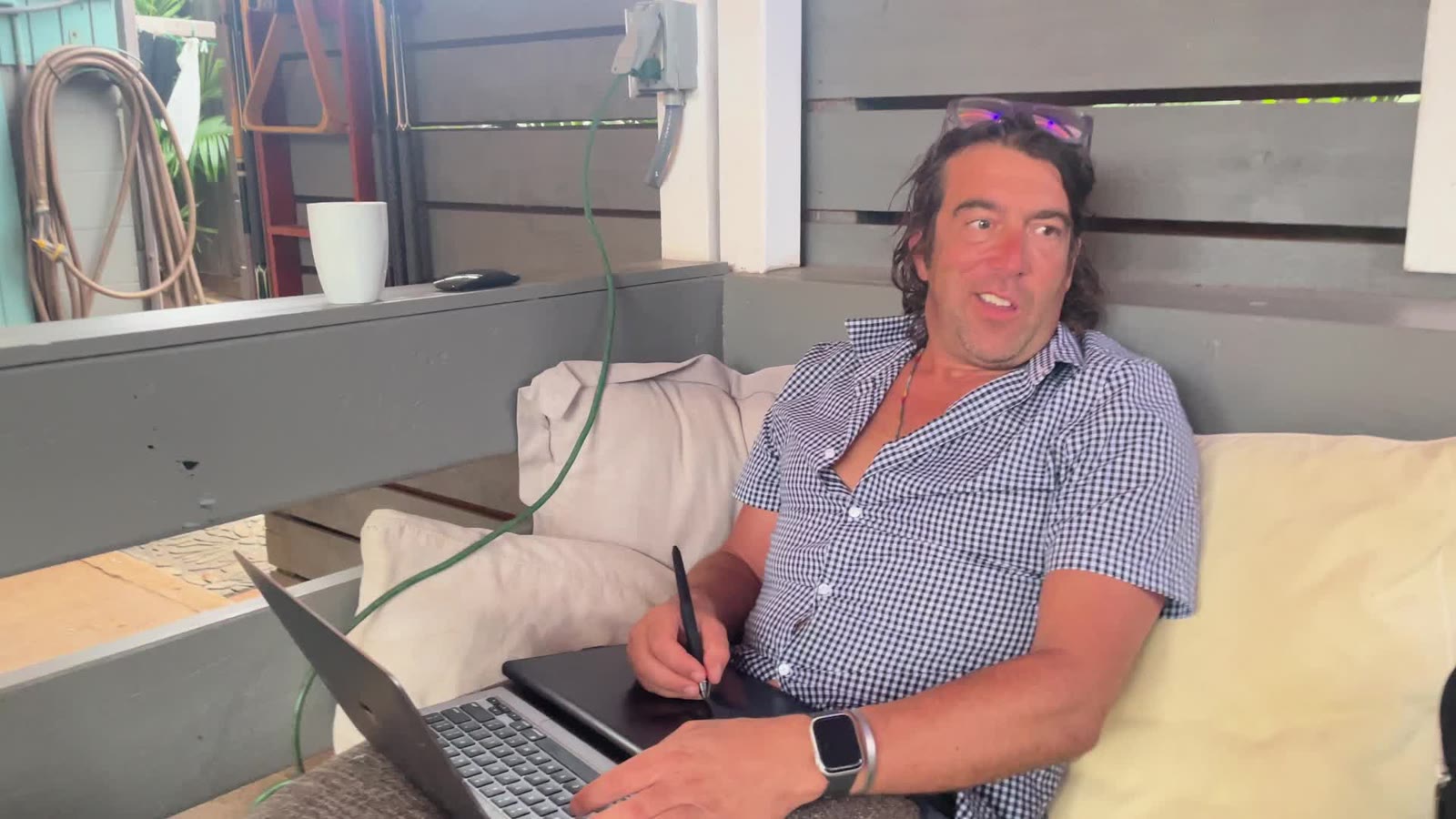
With a stylus and a digital brush I paint the picture fresh, by hand. The collage is my reference, not my canvas. It is my reading of the place and not a copy. I draw clean, sharp lines around the shapes of the land and push the color further than the day looked, because nature holds more color than most of us stop to notice. I move things a little. I keep what the place was.
Made with A stylus and a digital brush.
I step inside. Then I fix things.
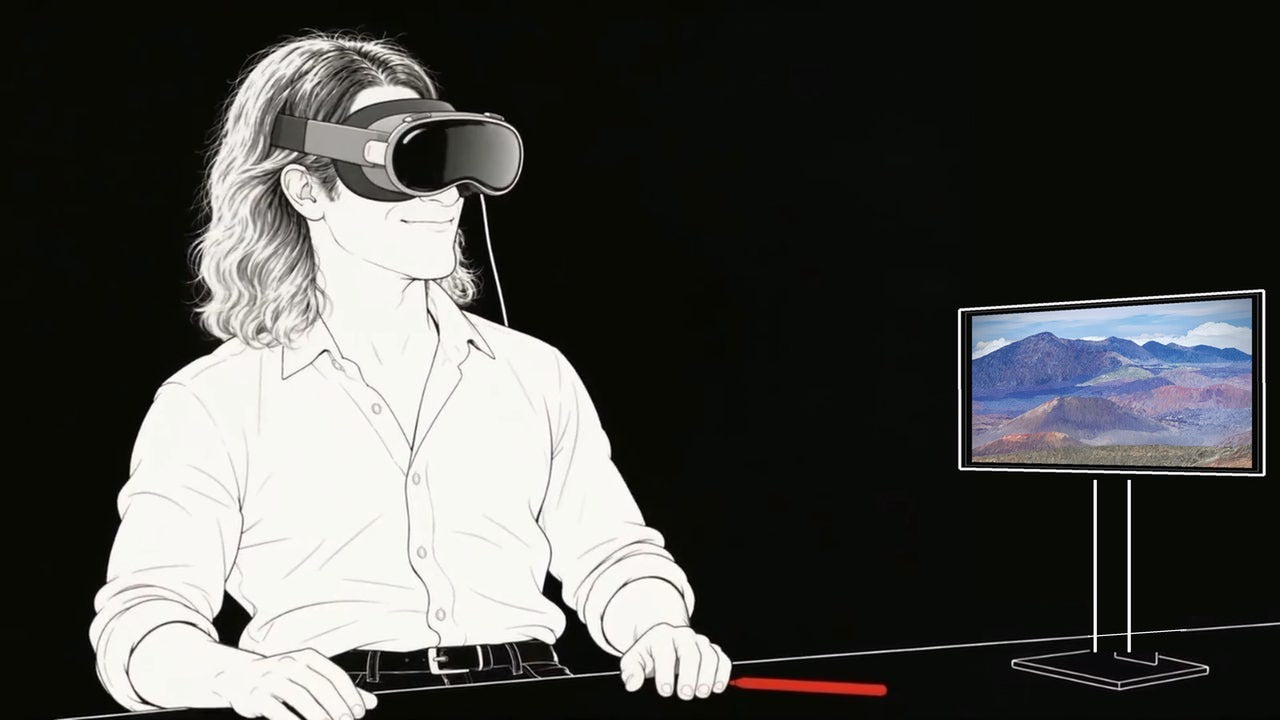
I put on an Apple Vision Pro and stand inside the painting at full scale. A mountain wants to be grander. A blue sits too light beside a navy. At full size I can feel whether the colors balance, not only see it. I adjust, step out, and go round again.
Made with An Apple Vision Pro.
It goes onto a sheet. Then the heat. Then the shine.
When the image is finished, I send it to a fabricator in North America, who makes each painting to order. The image goes onto a large sheet of transfer paper, coated with oil and minerals. The sheet is only a carrier. It holds the dye until the aluminum is ready for it.
The sheet meets a recycled aluminum panel under heat and pressure. The dye never turns to liquid. It goes straight to gas (yes, I’m showing off), passes into the panel’s coating and settles at different depths inside it. So the image is inside the coating, not on top of it. This process is called dye-sublimation.
A high-gloss polymer finish goes over the whole image, sealed. The gloss reflects the room, so the painting looks a little different as the light changes. I chose aluminum for three reasons: it carries a painting this large, you can stand close and touch it, and the reflection plays with bright color.
Made with Transfer paper, coated with oil and minerals. A sublimation press. A recycled aluminum panel (ChromaLuxe HD Gloss, .045″ thick). A high-gloss polymer finish.
Then it goes home. With you.
I sign and number each painting on the front. An aluminum certificate plate is fixed to the back. It ships crated and insured, ready to hang.
Made with An aluminum certificate plate, and hanging hardware: a wire, or a French cleat on the largest sizes.
The facts.
What you receive
- Painted with
- Most often my own photographs, Adobe software, a stylus and a digital brush. Checked at full scale in an Apple Vision Pro.
- How long
- A painting takes one to nine months. It also takes a lifetime, because everything that happens informs what I do.
- Made on
- Recycled aluminum: a ChromaLuxe HD Gloss aluminum panel, .045″ thick.
- How the image is set in
- Dye-sublimation. Dye on a transfer sheet is driven into the panel’s coating by heat and pressure. There is no ink, paper or glass on top.
- Finish
- High-gloss polymer, sealed.
- Signature
- Signed and numbered by me on the front, lower right.
- Authenticity
- There is no paper certificate. The certificate of authenticity is a permanent aluminum plate fixed to the back, recording the title, the size and the edition number.
- Sizes
- Most paintings come in three or four sizes. Wide paintings, two to one, run from 18 × 36 to 45 × 90 in, square ones from 18 × 18 to 42 × 42 in, and a few are multi-panel, up to 90 × 180 in. Each painting’s page lists its own.
- Editions
- Each size is its own numbered edition. Crater Lake National Park, for example, is 3 at 18 × 36 in, 25 at 30 × 60 in, 5 at 36 × 72 in and 3 at 42 × 84 in. When a size sells out, that edition is closed and never made again. Each painting’s page shows what remains.
- The file
- The digital file stays with me and is never sold or licensed to anyone else.
- Will it fade?
- There is nothing on top to fade or lift. Indoors, out of direct sun, the fabricator rates the surface for at least 80 years.
Buying it
- Price and payment
- Prices are fixed. Paintings start at $1,800. Most cost between $2,700 and $25,000, depending on size, and the large multi-panel pieces cost more. You pay in full; there is no deposit. Haleakalā National Park, for example, is $2,700 at 18 × 36 in, $5,500 at 30 × 60 in, $11,900 at 36 × 72 in and $22,900 at 42 × 84 in. Each painting’s page shows its own sizes and prices.
- Ships
- Each painting is made to order. Within the United States, it ships 3 to 4 weeks after the order is processed. For international shipping, you get a better estimate when you buy. It travels crated and insured.
- Hanging
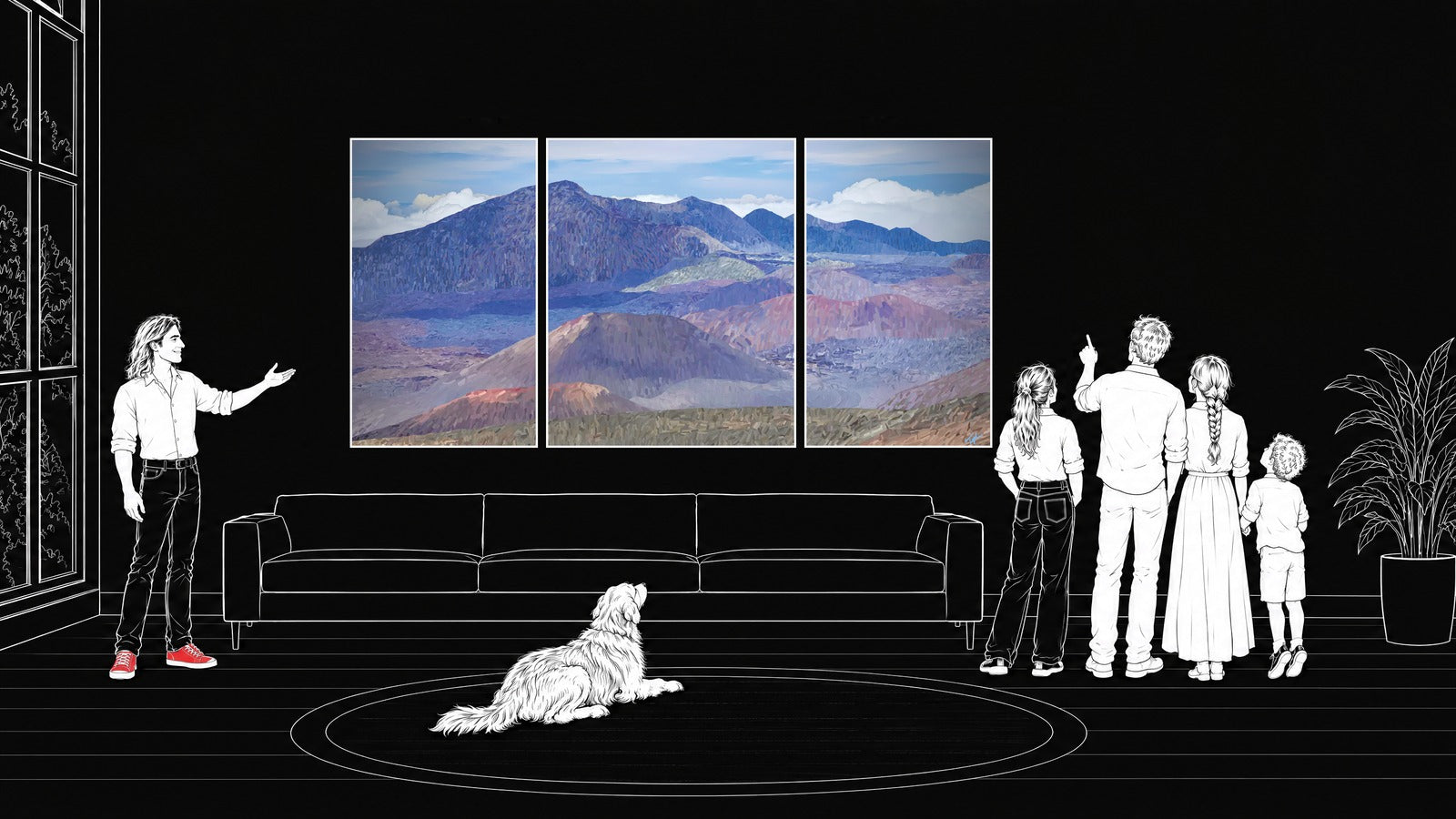
- Smaller sizes come ready to hang on a wire. The largest sizes hang on a French cleat system. That includes the Winter Bells quad, four panels, 90 in. tall by 180 in. wide, and the three-panel paintings, 60 in. tall by 120 in. wide.
- Is it heavy?
- Far lighter than you’d expect: aluminum, not glass or stone. Lift it by two edges, with clean hands, and never rest it on a corner. A knock can dent the aluminum.
- Kitchen? Bathroom?
- Any room, sensibly placed. The surface is sealed, so steam and splashes wipe straight off. Keep it a few feet from the stove, the fireplace and heating vents.
- If something is wrong
- Sales are final, because each painting is made for you. Damage in transit, or a flaw in the surface, is replaced at no charge. If anything is wrong when it arrives, tell us right away so we can make it right.
- Made by
- I work with two fabricators in North America, who make each painting to order. I hold them to a very high standard.
Where my paintings hang.
My paintings hang in eight galleries and in public places across the United States, and I have shown at Intersect Aspen and Intersect Palm Springs. Here is where you can see them now.
- Galleries
- Vail International GalleryVail, Colorado website
- Axiom Contemporary GalleryPhoenix, Arizona website
- Meyer GalleryPark City, Utah website
- RA ModernCrested Butte, Colorado website
- Momentum GalleryAsheville, North Carolina website
- bG GallerySanta Monica, California website
- UptrippingWinter Park, Colorado website
- KW ContemporaryKennebunkport, Maine website
- Public places
- The Hythe hotel, lobbyVail, Colorado
- Left Bank restaurantVail Village, Colorado
- Jenny Lake Visitor CenterGrand Teton National Park, Wyoming · U.S. Department of the Interior · through 2042
For galleries
The price of a painting is the same at every gallery that carries it and on this site. Every painting follows the same six steps, so the work holds together as a body. If you run a gallery, a museum or an art program and want to talk about my work, write to me.
Not just one painting.
Haleakalā is one place. I keep going to others, and each has its own series.
Why I paint
Every place I paint is real. I’ve stood in a lot of them, usually on skis. I don’t paint landscapes. I stand in them. The way the sun hits the snow, the Colorado blue in the air: that’s where a painting starts, long before there’s a brush. Every painting is a big part of my soul, so I put every experience into the colors and the energy.
How it began
For years I painted on canvas and kept the paintings in a closet. Film taught me to tell a story in one frame, and film and video games taught me to work with technology. Then I started painting on a computer. I like breaking the rules, and this broke a few. Now it is a method, six steps, repeated place by place. I find it transformative: a place goes in one end and a painting comes out the other.
National Parks
I am painting America’s national parks, from Grand Teton and Glacier to Acadia, the Everglades and Denali.
See the paintingsColorado
The state I was born in, from Vail, Aspen and Telluride to Boulder’s Flatirons and Rocky Mountain National Park.
See the paintings
Ski and Snow
Groomed runs, powder and mountain towns after dark, from Vail and Telluride to Park City and Whistler.
See the paintings
Pop
Space Whale, Rocket Giraffe, Three Turtles and The Great Octopus Escape.
See the paintings
California
Yosemite, Half Dome, Tahoe, Chinatown, Death Valley and San Francisco.
See the paintings


How a commission goes.
- A conversationOn a call or in person, about the place and your memories of it.
- Color testsA few rounds, until it feels right.
- Made, and homeIt ships within the United States 3 to 4 weeks after the order is processed.
Want one made?
If a place has stayed with you, tell me about it.